
Remembering the 14th Anniversary of Japan’s 311 Tohoku Earthquake and Tsunami
On the morning of March 11, 2025, a quiet hush fell over Japan’s northeastern coastline. In Ōtsuchi, Iwate Prefecture, an elderly man gently placed a bouquet of white chrysanthemums into the sea. The waves carried the petals away, as if answering the cries of the 22,000 lives lost 14 years ago. On March 11, 2011, a magnitude 9.0 earthquake and a 40-meter-high tsunami struck the Tohoku region, etching the “Great East Japan Disaster” into the nation’s collective memory. Today, hope blooms anew amid the scars, yet the pain of loss remains undimmed.
The Disaster: 30 Minutes That Changed Everything
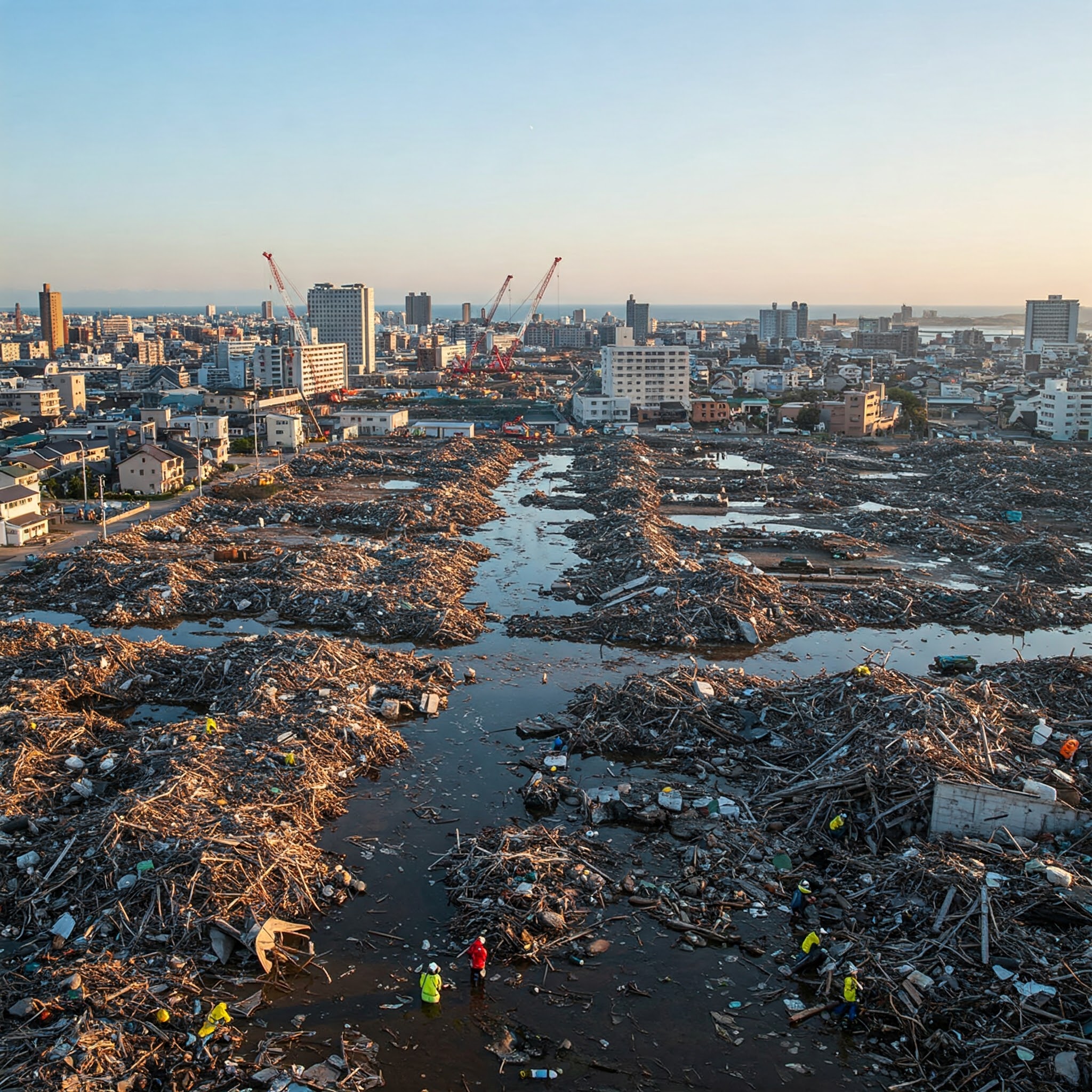
At 2:46 p.m., the ground began to convulse. Supermarket shelves collapsed, train tracks twisted into serpentine shapes, and people stumbled into open spaces. But the true nightmare arrived 30 minutes later—jet-black waves surged forward at jet-like speeds, swallowing entire towns.
In Minamisōma, Fukushima, teacher Ryota Nakamura still recalls leading students to their school’s rooftop: “The seawater devoured the entire playground like a monster. Every window in the building shattered.” In Miyako, Iwate, fisherman Masaru Kobayashi’s boat was hurled onto a rooftop 300 meters inland. In Kesennuma, Miyagi, an entire shopping district vanished beneath the waves.
The most haunting aftermath came from the meltdown at the Fukushima Daiichi Nuclear Power Plant. Radiation forced 160,000 people to flee, and Geiger counters wailed across the ruins for a decade. This “triple disaster”—earthquake, tsunami, and nuclear crisis—rewrote Japan’s approach to disaster preparedness.

Rebuilding: Fourteen Years of Healing
In the first week after the disaster, 30,000 soldiers and volunteers combed through mud and debris for survivors. But true recovery demanded decades of perseverance.
In Natori, Miyagi, a neighborhood once flattened by the tsunami is now a disaster prevention park. Beside the stump of an uprooted pine tree, newly planted cherry blossoms stretch six meters skyward. Every Wednesday, local schoolchildren polish a black memorial stone engraved with victims’ names. “Our teacher says remembering these names is the first step to protecting the future,” said Misaki, a fifth-grader.
Fukushima’s revival has been harder-won. Areas near the nuclear plant remained off-limits until 2022. In Futaba Town, robots still decontaminate radioactive debris, but the aroma of oden (Japanese stew) once again wafts from reopened pubs. “Only 30% of residents have returned, but when I saw lanterns glowing in the shopping street, I knew my hometown was alive,” said 73-year-old returnee Kazuko Sato.
In Rikuzentakata, Iwate, the “Miracle Pine” stands as a symbol of resilience. The lone survivor among 70,000 trees destroyed by the tsunami, it died in 2012 but was preserved as a monument. Around it, 20,000 new saplings now rise. “They’ll guard this coast for us,” said an elderly local.
Renewal: Light Amid the Scars
Every dawn, 86-year-old Akio Suzuki cleans a photo of his wife and granddaughter, who perished in the waves. “Every March 11, I go to the seaside memorial to tell them about the new 12-meter seawalls and the cherry blossoms on the hills,” he said.
The younger generation carries hope forward. At 13, Takuya Yoshida survived the nuclear disaster; today, the 27-year-old researches reactor decommissioning. “I want this land to grow crops again, not storage tanks for radioactive water,” he said, showing photos of his former school’s tsunami-wrecked playground—now a solar farm.
The disaster also forged global bonds. Miyagi fishermen collaborated with Norwegian engineers to build tsunami-resistant floating piers. Iwate students exchange disaster prevention notes with Indonesian tsunami survivors. Fukushima’s radiation data is shared with 82 nations. “Disasters teach us that humanity must unite,” said disaster expert Mariko Yamada.
Legacy: A Pledge for the Future
At 2:46 p.m. every March 11, Japan falls silent. Trains stop, schools pause, and TV screens go dark—not in mourning but as a vow to life. In Tokyo’s disaster simulation center, lines form daily at earthquake experience machines. Schools drill evacuation protocols on opening day. New homes are built above historic tsunami levels.
Fourteen years on, 75% of physical reconstruction is complete, but emotional wounds linger. Counselor Aya Takahashi drives 300 kilometers weekly to support survivors: “Some couldn’t say ‘I lost my child’ until last year. But speaking the pain is where healing begins.”

As cherry blossoms repaint Fukushima’s Namie River, 83-year-old Takeshi Yamamoto holds his great-grandson beneath the pink cascade: “The disaster took my home but taught me life’s fragility. Now, seeing this child play where radiation once ruled—that’s our true memorial.”
Year after year, cherry blossoms bloom over the ruins. They do not whisper of sorrow, but bear witness to a truth: While humans cannot conquer nature, we can always plant hope in the cracks of despair.
Source: DeepSeek A.I.
#311TohokuDisaster #FukushimaRecovery #TsunamiRemembrance #MiraclePine #DisasterPreparedness #ResilienceAndHope


